.png)

A Look at the New Practitioner Training Curriculum at Yah’s Apothecary
Jun 26
4 min read
Most people learn herbalism in fragments, collecting tea recipes from social media, saving random PDFs they rarely revisit, memorizing herb lists for common conditions, and jumping from one piece of information to another without ever building a strong educational foundation underneath it all.
A person can memorize hundreds of herbs and still struggle to answer questions like:
Why would I choose this herb over another one?
What body systems are actually involved here?
What patterns keep repeating?
What nutrients may be contributing?
What does this plant physically reveal about itself before I ever open a monograph?
Over time, many students end up with large amounts of information but very little structure. This is one of the major reasons we began restructuring the Student Vault into a more intentional semester-based training environment centered around observation, systems thinking, field study, implementation, and long-term practitioner development.
The goal was to create stronger progression, stronger pattern recognition, stronger observational skills, and stronger practitioner reasoning over time so students are not constantly restarting their understanding from scratch every few months.
A First Look at the New Semester Training Manual™
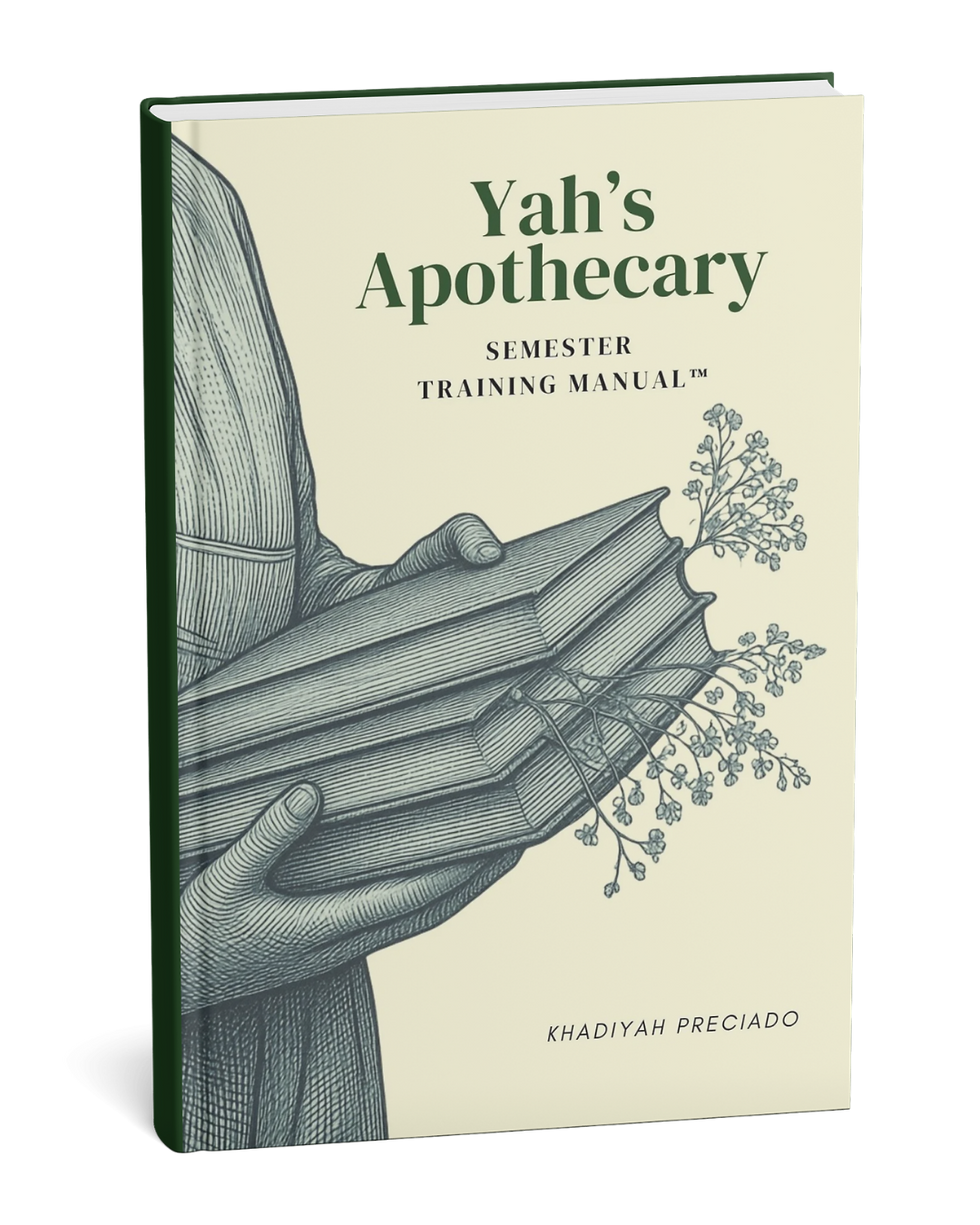
One of the biggest additions to the semester system is the new Semester Training Manual™, which has grown into a 200+ page curriculum companion designed exclusively for enrolled Yah’s Apothecary students participating in the semester environment.
What originally began as a few worksheets and semester notes slowly developed into a much larger practitioner training resource designed to help students organize observations, complete studies, track projects, document field work, and build stronger systems thinking throughout future semesters.

Built Around Observation, Not Memorization
One of the biggest shifts inside the curriculum is that the semesters are now designed to build upon one another instead of functioning like isolated lessons.
Students move through:
practicums
field studies
capstones
implementation exercises
reflection weeks
systems-based projects
Each section trains a different layer of herbal understanding.
Some semesters focus heavily on observation and morphology, while others focus on systems relationships, strategic herb selection, nutrients, tissue states, physical characteristics, or practitioner reasoning.
Rather than teaching students to simply memorize herbal actions, the semesters are designed to help students recognize relationships and patterns that repeat throughout plants, energetics, preparations, nutrients, and the body itself.
A Look Inside the Practicums
The new practicums focus heavily on sensory and physical observation.

Students may spend several weeks studying:
taste
color
texture
density
moisture
preparation behavior
tactile differences between herbs
For example, students working through the Physicality Practicum™ may compare slippery herbs, fibrous herbs, resinous herbs, drying herbs, or moistening herbs while documenting how those herbs physically behave during preparation and what similarities those characteristics may share with tissue states and body patterns.
Here are a few preview pages from inside the practicum sections:
The goal is to train students to slow down and observe more carefully rather than immediately jumping to symptom lists and memorized protocols.

Field Studies Designed to Build Deeper Relationships
The field studies continue building on that same observational foundation.
One semester may focus on plant families and the repeating similarities shared between related herbs, including morphology, growth habits, color, energetics, scent, and preparation styles.
Another may focus on vitamins and minerals so students can begin connecting nutrients, physiology, symptoms, energetics, and herbal relationships together in a more practical way.
Here’s a preview of one of the field study layouts:
These studies are designed to strengthen systems thinking over time rather than encouraging students to rely entirely on memorization.

Capstones That Train Practitioner Thinking
The capstones are designed to stretch the student’s reasoning and observation skills in a much deeper way.
One capstone, Know Your Materia Medica™, focuses on following a living plant through its life cycle so students can observe growth stages, structure, environmental relationships, harvest timing, seasonal changes, and physical transformations firsthand.
Another capstone, Two Herbs, One Goal™, trains students to compare herbs with similar purposes while analyzing why a practitioner may strategically choose one herb over another depending on energetics, constitution, nutrient density, tissue state, preparation method, or overall presentation.
Here is a small preview from one of the capstone sections:


Students are not simply completing assignments.
They are learning how to observe, compare, connect systems, recognize patterns, and think through herbal strategy more intentionally over time.
More Structure, More Depth, More Long-Term Growth

As the semesters continued expanding, it became obvious that students needed more than scattered worksheets and disconnected downloads.
The Semester Training Manual™ was created to bring everything into a more organized structure while giving students one centralized place to:
document observations
complete practitioner studies
organize field work
track projects
map systems
sketch plants
reflect on patterns
build long-term retention
Rather than functioning like a standard workbook, this manual was designed to become an active training companion and long-term educational record that students continue building upon throughout future semesters at Yah’s Apothecary.
We’re extremely excited about where the semesters are heading and even more excited to place this into the hands of students serious about building real herbal understanding beyond memorization.
– YA Team


.jpg)
Comments