.png)

Doctrine of Signatures, Taste, and Color in African Herbalism
Jun 19
5 min read
Updated: Jul 8

Africa holds some of the oldest recorded herbal knowledge we have. The Ebers Papyrus, dating back to around 1550 BCE, documents hundreds of plant-based remedies used in ancient Egypt. Systems of care in places like Ethiopia developed alongside this, with their own methods, plant knowledge, and ways of understanding the body. Across the continent, countries like Ghana, Benin, and others each developed their own herbal traditions, all grouped under the term "African Herbalism".
This isn’t new knowledge.
It’s old.
And if we’re being honest, a lot of what people now call “granny herbalism” comes from that same kind of foundation, even if it’s not always recognized that way.
Most people have seen it.
A grandmother putting something together without measuring, reaching for what she knows, and it works. No long explanation, no breakdown of compounds, just use over time and results that speak for themselves.
On the surface, African herbalism can look like that.

You hear that a plant looks a certain way and is used for something specific, or that something bitter is used in a certain way, and it can sound like coincidence. Or you might think, I wish I could understand plants like that, like it just comes natural to some people.
That’s usually where the conversation stops.
The doctrine of signatures gets reduced to the idea that a plant looks like what it is used for, and African herbalism gets described as informal or unstructured. But that description says more about the outside perspective than it does about the system itself.
What was actually happening was observation. Over time, people paid attention to how plants looked, how they tasted, where they grew, and how they behaved. They noticed patterns, tested them, and taught their communities. That process didn’t rely on memorizing lists first, it relied on familiarity.
So, when we ask, what is the doctrine of signatures, we’re not talking about guesswork or symbolism on its own. We’re talking about a way of reading plants.
When we ask, what is African herbalism, we’re not talking about a single method or one unified system. We’re talking about a collection of practices across regions, built on use, repetition, and attention, where plants are understood through how they show up over time, not just how they are described.

That way of learning hasn’t disappeared. In many parts of Africa today, there are still more people actively working with plants than there are in places like the United States, even without the same access to books, formal programs, or online resources. The difference is not information; it’s in the relationship, and now, slowly, some of what was learned through use is being explained in a different language.
The colors we see in plants are tied to compounds. The tastes we recognize are tied to how those plants interact with the body. What was once observed is now being measured, but the foundation was already there.
Holistic Healer Class Bundle
Buy Now
How I Started to Understand Herbs Differently

For me, this didn’t start as a system. It started with trying to understand something that wasn’t clicking yet. I picked up African Holistic Health by Dr. Llaila Afrika and came across his work on color and how it relates to different organs. I saw the charts. I saw the connections. And like most people, I tried to memorize it. I went over it again and again, trying to make it stick, and it didn’t.
I would start, stop, come back to it, and stop again. I wanted to understand it, but it felt like I was holding pieces without knowing how they fit together.
At some point, I stopped trying to force it and I prayed. Not for more information, but for understanding. I had already read it. I just needed to know how to make sense of what I was seeing.
The next time I came back to it, I asked a different question.
"What makes the color?"
That was the shift.
Once I asked that, everything started to open up. I began looking into what actually gives plants their color, and that led me to phytochemicals. I saw that different compounds show up differently depending on how much is present, and that’s what we’re seeing when we look at color.
From there, it didn’t stop at color.
I started paying attention to taste, to smell, to how plants present themselves overall, and I started to see that these things weren’t separate. They were all pointing to something. Color was one layer, taste was another, smell added more information, and together, they started to form a picture.
Not something I had to memorize,
but something I could observe.
Ebook Herbal Holistic Healing: African Herbalism For Modern Times
Buy Now
Taste: The First Thing Most People Ignore

Taste is usually the first thing people notice about a plant, but it’s often the last thing they take seriously. If something is bitter, they try to cover it. If something is strong, they dilute it. The focus becomes making it easier to take, not understanding what that taste is telling you.
But taste carries information. Bitter, sweet, pungent, astringent, sour. These aren’t just flavor categories; they show up consistently in how plants interact with the body.
When you start paying attention to taste, you start noticing patterns. Certain tastes tend to move things. Others slow things down. Some dry, some moisten, some stimulate. You don’t have to memorize that all at once. You start by noticing.
If you want a deeper breakdown of how taste shows up across different herbs and what to look
Color: What the Plant Is Showing You

Color is often treated as something visual, but it’s tied to something much deeper.
Plants produce color because of specific compounds. Greens point to chlorophyll. Reds and purples often come from anthocyanins. Yellows and oranges are tied to carotenoids. These aren’t random. They are part of how the plant functions.
And those same compounds are often connected to how the plant interacts with the body.
So, when you look at a plant, color is not just appearance. It’s information.
The more you see it this way, the less you rely on memorizing charts and the more you start recognizing patterns naturally.
If you want to see how color connects more directly to plant function and systems,
What the Doctrine of Signatures Actually Is
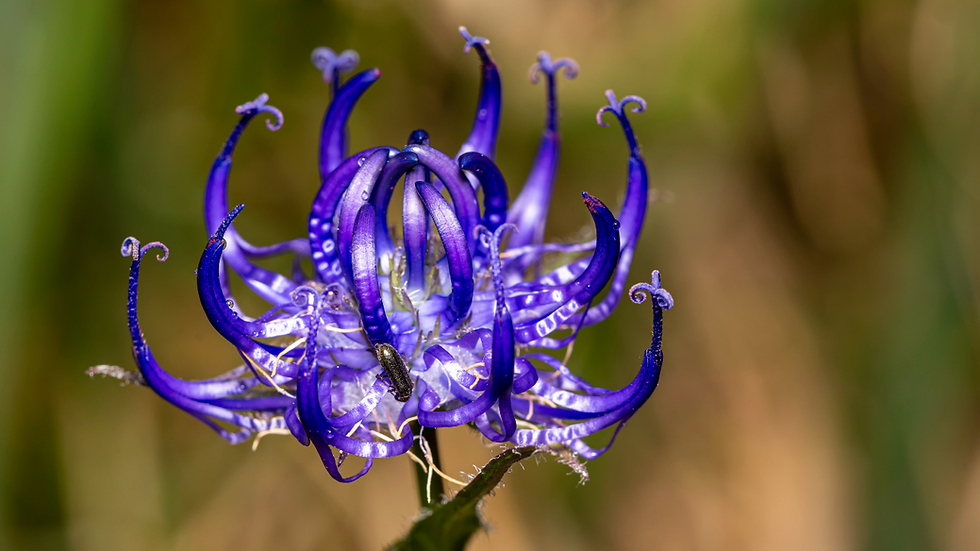
The doctrine of signatures is often simplified to the idea that a plant looks like what it is used for.
That’s only part of it, and when it’s reduced to that, it either gets dismissed or taken too far.
What it actually reflects is observation over time.
People paid attention to structure, shape, color, taste, and where a plant grew. They noticed patterns, tested them, and kept what held up. Over time, those observations became a way to recognize how a plant might be used.
It wasn’t about guessing.
It was about paying attention long enough to see what stayed consistent.
When you bring taste, color, and structure together, the doctrine of signatures starts to make more sense. It becomes less about symbolism and more about recognition.
The Holistic Herbal Helper: Journal of Materia Medica
Buy Now
A Final Thought
Most people think they need more information before they can understand herbs.
In many cases, they need to slow down and look at what’s already in front of them.
That’s where understanding starts.
If you’ve ever felt like you’re learning herbs, but nothing is sticking, it usually comes down to how you’re looking at them.
In Blossoming Beyond Mistakes, I break this down further and show how to approach herbalism as a system, not just a list of uses, so things start to make sense and stay with you over time.


.jpg)
Comments